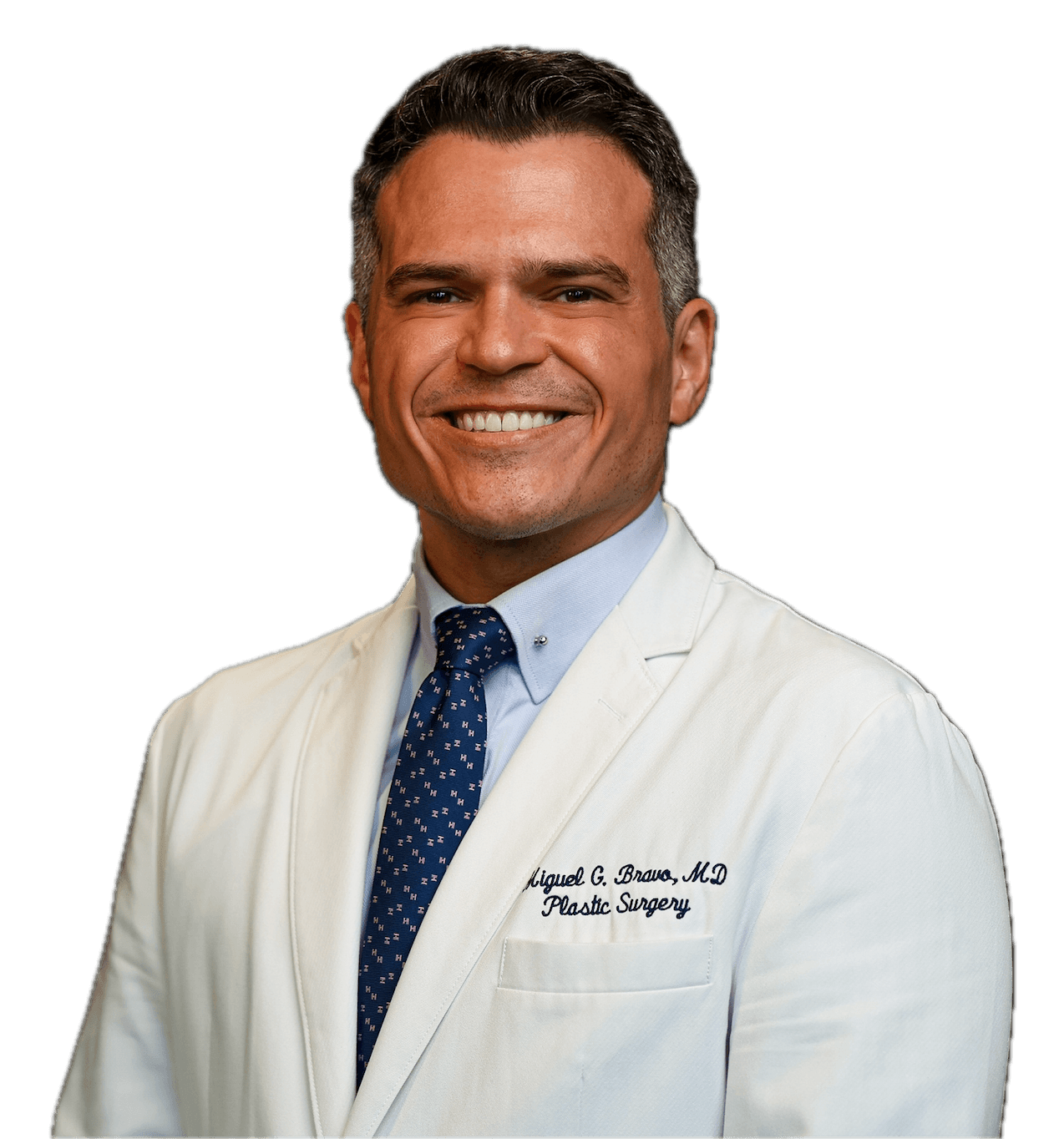

How I Think About Peptides in Plastic Surgery
Plastic surgery includes the preparation before your operation and the care afterwards. Patients increasingly ask me whether peptides can improve that recovery. My starting point is the same as for any intervention: what benefit has been shown in people, what risks remain uncertain and whether the evidence applies to this patient and procedure. This article explains the distinction between established medicines and experimental recovery claims. It is not an offer of peptide treatment or a recommendation to obtain or self-administer these compounds.
What Peptides Are and Why They Are Discussed in Surgery
A peptide is a short chain of amino acids. Some peptide medicines have established uses; others are being investigated for effects on inflammation, collagen and tissue repair. A 2026 review in the Aesthetic Surgery Journal describes biological promise but a lack of rigorous clinical trials. That distinction matters: an effect in cells or animals does not establish faster or safer recovery after a human operation. We also need evidence about the formulation, dose, route and possible harms before drawing a clinical conclusion.
Regulatory status must be checked for the exact medicine, formulation, route and indication in the country where treatment is proposed. Approval for one condition does not establish benefit for surgical recovery, and a compounded product is not equivalent to an approved medicine. US regulatory references in this article do not establish authorization in the UAE.
The Goals I Focus on in Peri-Operative Optimisation
Before I talk about specific compounds, I want to be clear about the goals I think about for every patient I prepare for surgery. Peri-operative optimisation, with or without peptides, is built around four ideas.
1. Preparing safely. Identify medical or nutritional issues that could affect the operation, review medicines and plan practical support.
2. Supporting recovery. Follow wound-care, movement and medication instructions, and recognize problems that need assessment.
3. Caring for scars. Use the scar-care plan appropriate to the wound and healing stage, with realistic expectations about permanent scars.
4. Looking after long-term health. Weight stability, strength and general health matter, while ageing and individual biology still affect the result.
The practical starting points are an appropriate operation, nutrition, medication review, nicotine advice, movement, wound care and follow-up. New treatments should earn their place through evidence relevant to the outcome we want to improve. An interesting mechanism alone is not enough to justify adding a recovery treatment.
BPC-157 in the Research Literature
BPC-157 is a synthetic peptide studied mainly in preclinical research. Those findings do not establish better healing after plastic surgery in people. The FDA’s 2026 scientific review describes insufficient human safety information, including important gaps for proposed routes of administration. A small human study or a favourable animal result cannot establish a safe postoperative protocol.
TB-500 and Thymosin Beta-4
TB-500 is a name used for a thymosin-beta-4-related fragment. It should not be treated as interchangeable with full-length thymosin beta-4. Evidence about one molecule, route or disease cannot be transferred automatically to another product. The FDA identifies major gaps in human safety information for the fragment it describes as TB-500; this does not support promising better scars or surgical recovery.
GHK-Cu and Skin Quality
GHK-Cu is a copper-binding peptide investigated for skin biology and tissue repair. Topical cosmetic use and laboratory findings do not establish the benefit or safety of injections, or prove that it improves a surgical scar. Evidence should be assessed for the exact product and outcome. Do not substitute a peptide product for the wound and scar care recommended for your operation.
Tesamorelin and Visceral Fat
Some patients ask about tesamorelin, a medicine that stimulates growth-hormone release. Its FDA-approved use is reduction of excess abdominal fat in adults with HIV-associated lipodystrophy; it is not indicated for weight-loss management. This indication does not establish a routine role in preparation for cosmetic surgery. Its risks, including glucose intolerance and raised IGF-1, need medical assessment.
Peptide comparison at a glance
BPC-157. Preclinical research is not proof of faster human surgical healing. Human efficacy and safety remain insufficiently established for a routine postoperative protocol.
TB-500. A thymosin-beta-4-related fragment, distinct from the full-length peptide. Product identity and limited human evidence matter; it is not an established scar or recovery treatment.
GHK-Cu. Investigated for skin biology. Evidence for topical products should not be generalized to injections or to better healing after an operation.
Tesamorelin. A prescription medicine with a specific HIV-associated lipodystrophy indication. That is different from weight-loss treatment or routine preoperative body-contouring optimization.
Other Peptides That Come Up in the Conversation
CJC-1295, ipamorelin and thymosin alpha-1 also appear in discussions of recovery or wellness. They have different pharmacology and evidence and should not be treated as a proven perioperative package. Current product authorization, human evidence and safety must be evaluated separately; a claim about one peptide cannot validate the others.
GLP-1 medicines and anaesthesia. Medicines such as semaglutide and tirzepatide need review before surgery because they can delay stomach emptying. Current multi-society guidance allows many patients to continue them, while higher-risk situations may need a different diet, timing or anaesthetic plan. Do not stop or continue a medicine solely on the basis of this article: your anaesthetist, surgeon and prescriber should agree the plan. If you are considering body contouring after weight loss, include your medicines and weight trend in that assessment.
How I Approach Preparation Before Surgery
Preparation starts with your planned procedure, medical history, medicines, nutrition, weight trend and support at home. Sometimes the useful next step is to address a modifiable risk or postpone surgery. For abdominal concerns, the liposuction versus tummy-tuck guide explains why the operation itself must match the anatomy. Experimental recovery claims should not distract from that assessment.
How I Approach Recovery After Surgery
After surgery, follow the specific instructions for your wounds, medicines, activity and review appointments. Time away from work is not the same as complete recovery. Scar treatment should match the healing stage, and any new supplement or medicine should be discussed with the treating team. Contact them promptly about unexpected or worsening symptoms instead of attempting to treat a complication with a peptide.
Long-Term Considerations
Long-term care should focus on your health and realistic expectations. Weight change, ageing and individual healing can alter a surgical result. Further medication or treatment should have a defined indication and a measurable goal; sometimes no additional intervention is appropriate. Review new concerns with the relevant clinician rather than adding products because they are described as regenerative.
Safety, Source and Medical Supervision
Two points apply universally and I cannot stress them enough.
Supervision does not replace evidence. A clinician must consider the proposed benefit, uncertainty, interactions and monitoring. Medical oversight cannot make an inadequately studied product proven or risk free. It is reasonable for the outcome of that assessment to be no additional treatment.
Product identity and quality matter. Online products may have uncertain ingredients, concentration or sterility. A research-use label does not make a substance suitable for self-injection. Discuss anything you are taking with your treating team, including supplements and products bought online, so it can be considered in the surgical plan.
Is This Conversation Right for Every Patient?
No. Preparing for surgery does not require a peptide add-on. The question is whether a specific intervention has sufficient evidence for your circumstances and whether its benefits justify its risks. Interest in a new treatment is a reason to examine the evidence, not a reason to assume you need it.
Discuss Your Case at a Consultation
If you are considering plastic surgery in Abu Dhabi, a consultation can clarify the operation, alternatives, preparation and recovery that fit your circumstances. Bring a list of medicines and supplements and ask which steps have evidence for your procedure. Request a consultation with Dr. Bravo to discuss that plan.
Medical Disclaimer
This article provides general education and does not replace medical assessment. It does not establish that a peptide improves surgical recovery or that any product is authorized for a proposed use in the UAE. Do not obtain, inject or change medicines on the basis of this page. Discuss your preparation and recovery with the clinicians responsible for your care.
References and further reading
Wiegmann and colleagues. The Peptide Plastic Surgeon. Aesthetic Surgery Journal, 2026. Published online 23 January 2026. A review of potential applications; rigorous human surgical trials remain limited.
FDA. BPC-157 scientific review for the July 2026 Pharmacy Compounding Advisory Committee. Discusses the evidence and safety gaps. Advisory recommendations are not drug approval.
FDA. Safety information for certain substances used in compounding. Product and route distinctions are important.
Pickart and Margolina. Regenerative and Protective Actions of the GHK-Cu Peptide, 2018. Biological and preclinical findings do not establish improved surgical outcomes.
FDA. EGRIFTA WR (tesamorelin) prescribing information. The indication is HIV-associated lipodystrophy, not general weight-loss management.
Multi-society guidance on GLP-1 medicines before procedures, 2024. Medication decisions are individualized.