A Condition Millions Have, But Few Know About
Lipedema is a chronic condition affecting an estimated 11% of women worldwide, yet it remains one of the most underdiagnosed disorders in medicine. Patients with lipedema accumulate abnormal fat deposits, primarily in the legs, thighs, and sometimes arms, that do not respond to diet or exercise. For years, many of these patients are told they simply need to lose weight. The reality is different: lipedema is a medical condition with a genetic basis, and it requires a specific treatment approach. Dr. Miguel Bravo, a European Board-Certified Plastic Surgeon in Abu Dhabi, has dedicated a significant part of his practice to the diagnosis and surgical treatment of lipedema.
What Is Lipedema?
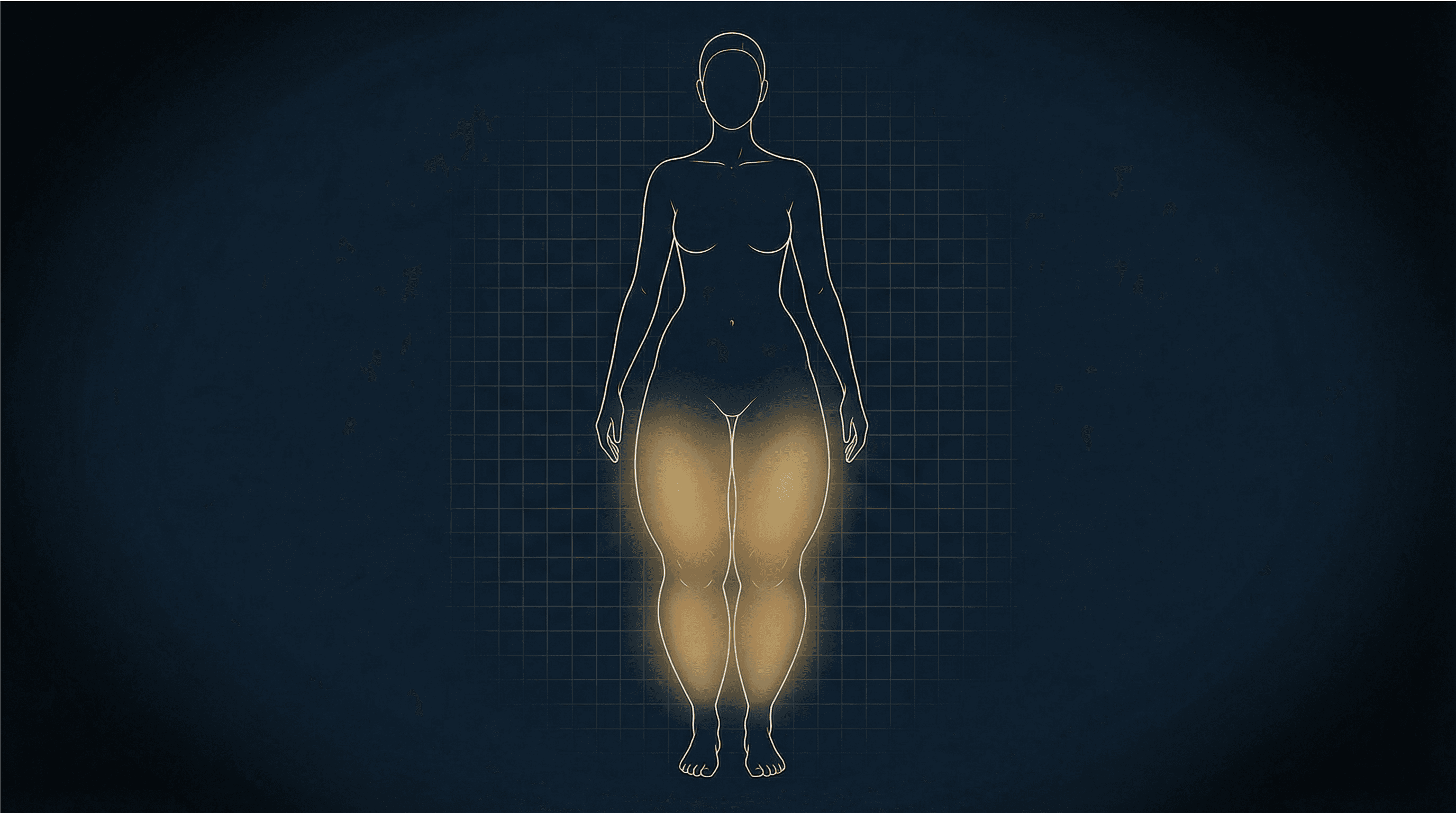
Lipedema is a disorder of adipose (fat) tissue characterised by symmetric, disproportionate fat accumulation in the limbs. Unlike regular fat, lipedema fat is pathological: it contains altered adipocytes, impaired lymphatic drainage, and increased tissue inflammation. Key characteristics include:
Symmetric distribution: Both legs (or arms) are affected equally, while the hands and feet are typically spared, creating a “bracelet” or “cuff” effect at the wrists and ankles.
Resistance to diet and exercise: Even with significant caloric restriction or intense exercise, lipedema fat does not reduce.
Pain and bruising: The affected areas are often tender to touch and bruise easily, even from minor contact.
Progressive nature: Without treatment, lipedema tends to worsen over time, particularly during hormonal changes (puberty, pregnancy, menopause).
Lipedema vs. Normal Fat vs. Obesity: How to Tell the Difference
The most common misdiagnosis for lipedema is simple obesity or being “overweight.” Many patients with lipedema have spent years dieting, exercising intensely, and blaming themselves for fat that simply will not respond to lifestyle changes. Understanding the differences is the first step toward correct treatment:
Lipedema fat: Accumulates symmetrically in the legs, thighs, and sometimes arms. The torso remains relatively lean, creating a visible disproportion between upper and lower body. Hands and feet are always spared, producing a characteristic “bracelet” effect at the wrists and ankles. The tissue is painful to touch, bruises easily, and feels nodular under the skin. Critically, lipedema fat does not respond to caloric restriction, exercise, or even GLP-1 medications. A patient can lose significant weight from their upper body while their legs remain unchanged.
Normal/obesity-related fat: Distributes proportionately across the entire body, including hands, feet, and face. It responds predictably to caloric deficit, when you lose weight through diet, exercise, or medication, fat reduces across all areas. The tissue is not painful to touch and does not bruise abnormally. There is no disproportion between upper and lower body.
Lymphedema: Causes swelling from fluid retention, not fat accumulation. Often asymmetric (one leg more than the other). Tissue pits when pressed with a finger (pitting oedema). Affects feet and hands, the opposite of lipedema. Worsens with prolonged standing or immobility.
A simple self-check: stand in front of a mirror and assess whether your legs are disproportionately larger than your torso. Press your shin. Does the tissue pit or spring back? Are your ankles significantly narrower than your calves, creating a “step”? If your legs are disproportionate, painful, and have not responded to diet, you should seek evaluation for lipedema.
Dr. Bravo uses clinical examination combined with high-resolution ultrasound to assess tissue composition, measure subcutaneous fat thickness, and evaluate lymphatic function. This imaging-based approach provides objective confirmation of the diagnosis and helps stage the condition accurately.
Stages of Lipedema
Stage 1: Skin surface is normal; fat tissue underneath feels nodular (like small beads beneath the skin).
Stage 2: Skin surface becomes uneven with larger nodules and indentations; fat deposits are more pronounced.
Stage 3: Large masses of fat tissue develop, particularly around the thighs and knees, affecting mobility and quality of life.
Early intervention produces the best outcomes. Patients in Stage 1 or 2 respond most favourably to treatment.
Treatment: Why Specialised Liposuction Works
Conservative treatments, compression therapy, manual lymphatic drainage, and anti-inflammatory nutrition, can manage symptoms but do not remove the pathological fat. The only evidence-based treatment that removes lipedema fat is specialised liposuction.
Dr. Bravo uses tumescent liposuction with water-assisted technology (WAL) or ultrasound-assisted liposuction (VASER) for lipedema patients. These techniques are gentler on the lymphatic system compared to traditional liposuction, which is essential because lipedema patients already have compromised lymphatic function.
The goals of surgery are to reduce the volume of pathological fat, improve limb proportion, relieve pain, and slow disease progression. Multiple sessions may be required depending on the extent of involvement.
Results and Patient Impact
For many lipedema patients, surgery is transformative, not only physically but emotionally. Patients frequently report reduced pain, improved mobility, the ability to exercise comfortably for the first time in years, and a significant improvement in quality of life.
It is important to understand that liposuction for lipedema is not cosmetic in the traditional sense. It is a medical procedure addressing a chronic condition. Post-operative compression therapy and ongoing lymphatic care remain important for long-term management.
Getting a Lipedema Diagnosis in Abu Dhabi
If you suspect you may have lipedema, the first step is a consultation with a physician experienced in recognising the condition. Dr. Bravo offers comprehensive lipedema assessments at Elyzee Hospital, Abu Dhabi, including clinical evaluation, ultrasound assessment, and a personalised treatment plan. Early diagnosis can prevent progression and significantly improve long-term outcomes.